Active leaks and water entry
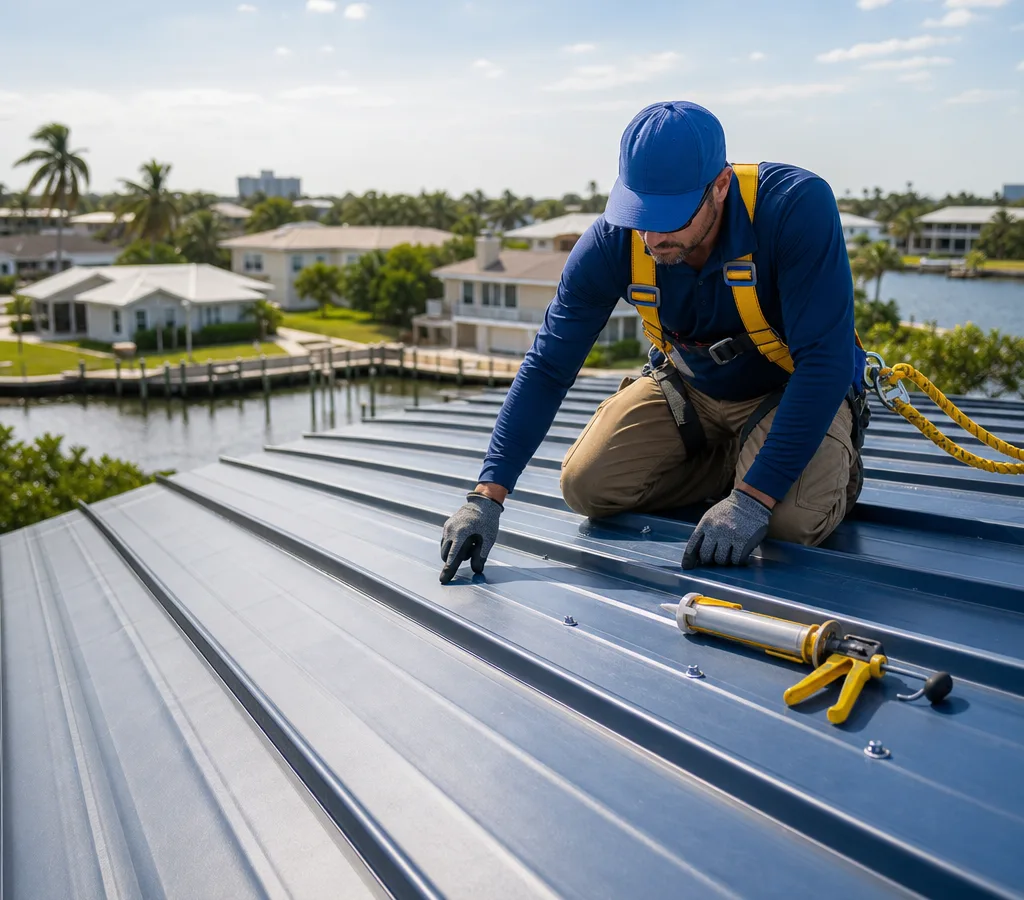
We trace leaks to the actual entry point, which is often a seam, penetration flashing, or fastener line rather than the spot where water shows inside.
Serving Jacksonville, Florida & surrounding areas
Metal Roof Repair · Jacksonville, FL
Stop leaks, slow rust, and secure loose fasteners with repair work that matches your roof system and holds up to Northeast Florida weather.
Jacksonville
Roof Repair
Property Inspection
Find the Source First
If you are searching for Jacksonville metal roof repair, you usually have a specific symptom: a drip after a hard rain, a stain on the ceiling, a panel that looks lifted, or rust starting at an edge or fastener. Metal roofing is durable, but it is not maintenance-free. Fasteners back out, sealants age, and penetrations such as vents, pipes, and skylights can become leak points over time.
Jacksonville Metal Roofing focuses on repairs that fit the roof you actually have, whether it is exposed-fastener panels, standing seam, or metal installed over an older roof. The goal is simple: find the source, repair it using the right method for that system, and leave the roof cleaner and tighter than we found it.
In Jacksonville, wind-driven rain and long stretches of heat can expose small weaknesses quickly. A pinhole or a failed washer might not show up in a light shower, then becomes obvious during a heavy storm. Catching issues early often means a localized repair instead of expanding damage to decking, insulation, or interior finishes.
Repair Capabilities
We trace leaks to the actual entry point, which is often a seam, penetration flashing, or fastener line rather than the spot where water shows inside.
Backed-out screws and deteriorated neoprene washers are common on exposed-fastener systems. We replace them with correctly sized fasteners and address the pattern, not just a few obvious screws.
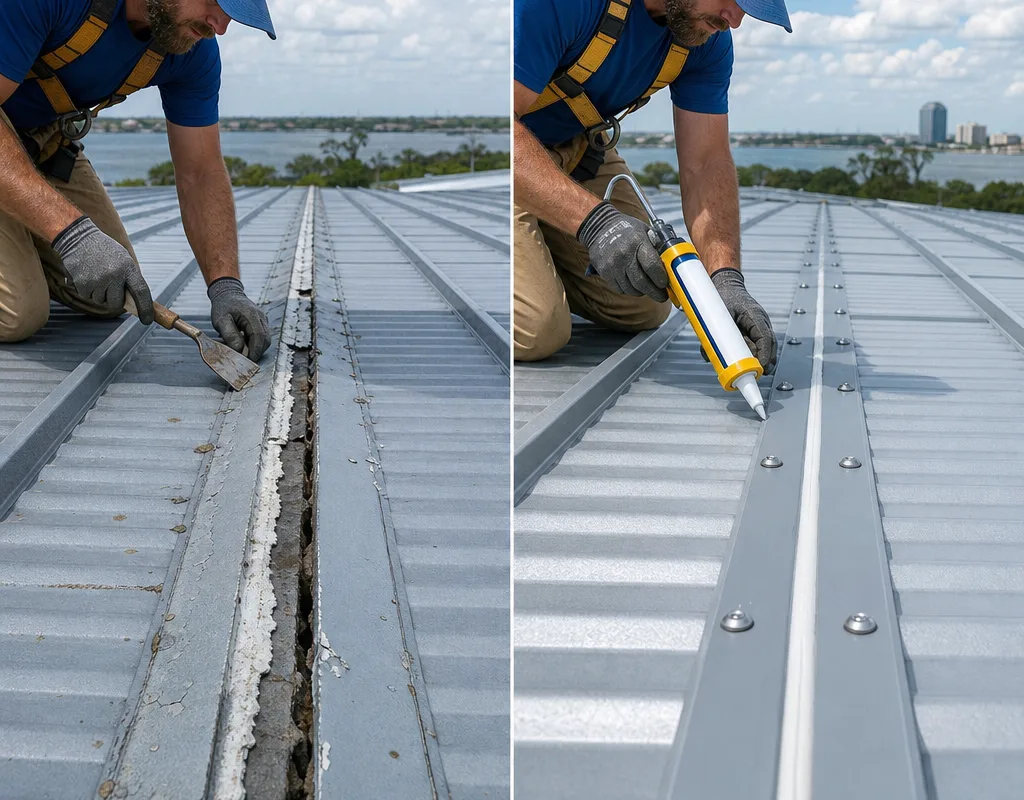
Seam separation and end-lap issues need the right preparation and products. We clean, prep, and seal or reinforce based on the panel type and movement.
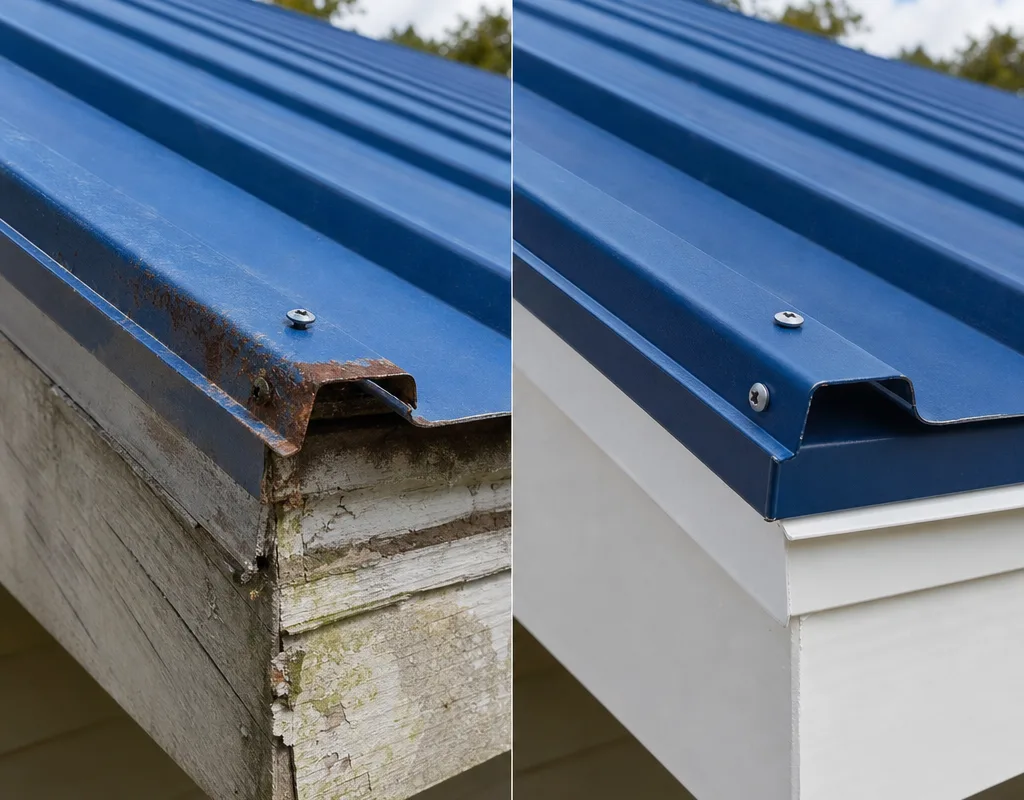
We remove loose corrosion, treat affected areas, and repair the underlying detail that is holding moisture, such as an edge, cut, or failing trim connection.
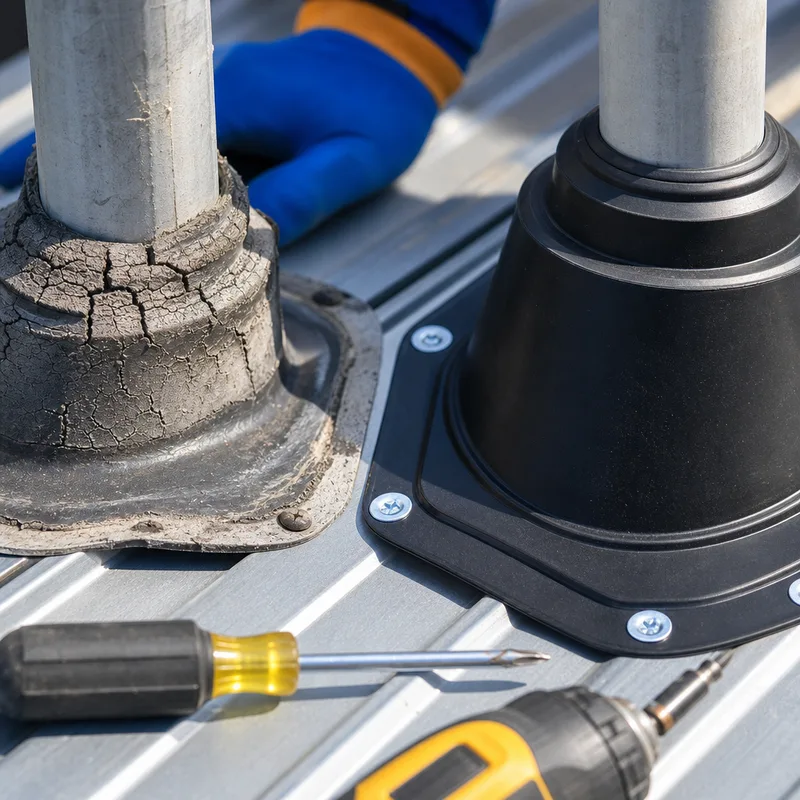
Most metal roof leaks start where something goes through the roof. We repair or replace boots and flashing details so they stay watertight as the roof expands and contracts.
After a strong storm, damage can be subtle. We inspect for lifted panels, loosened trim, and impact points, then provide a clear repair scope for decisions or documentation.
System-Specific Work
A good repair respects how metal roofing works. Metal expands and contracts with temperature changes, so the fix has to allow normal movement without tearing sealant lines or stressing fasteners.
For exposed-fastener roofs, a long-term repair often means more than adding caulk. The right approach may include replacing problem fasteners, correcting hole-size issues, addressing oil-canning-related movement at seams, and reworking a flashing detail so water is pushed away correctly.
For standing seam systems, repair work needs careful handling to avoid deforming seams or creating new leak paths. We focus on compatible sealants, correct closure details at transitions, and proper treatment of penetrations.
You will get straight answers about what is repairable, what is temporary, and what has reached the point where replacement is the smarter investment. If you are also planning a full system change later, our team handles metal roofing in Jacksonville FL and can talk through repair-versus-replace timing based on roof condition and budget.
Inspection to Completion
We start at the symptom and work uphill and outward: seams, penetrations, transitions, and fastener lines. When needed, we check attic areas for moisture tracking that can mislead the eye.
You get a clear description of what is failing, what we recommend, and what the repair includes. If there are multiple valid approaches, we explain the tradeoffs.
Metal repairs depend on prep. We clean and dry the area, remove failed sealant, address corrosion, and prepare surfaces so sealants and tapes bond as designed.
We replace fasteners where needed, repair or replace flashing details, reinforce laps and seams, and correct trim or closure issues that are letting wind-driven rain get in.
We verify the repaired details, tidy the work area, and walk you through what was done and what to watch over time, especially after major storms.
Planning Your Repair
Most metal roof repair in Jacksonville typically ranges from about $350 to $1,500 for smaller fixes like fastener replacement, minor seam sealing, or a single penetration repair, while larger repairs involving multiple leak points, damaged flashing, or extensive corrosion work often run $1,500 to $4,000+.
Your final price depends on roof height and access, panel type such as standing seam versus exposed fastener, how many areas are affected, the condition of existing sealants or coatings, and whether wet decking or substrate issues are discovered. Exact costs are confirmed after an on-roof inspection and a written scope.
Jacksonville
Repair Details
Coastal Roof Systems
Field Repair Examples
Local Roof Conditions
Metal roof repair details can change with building style and exposure.
On the Southside and around Baymeadows, many properties have newer additions and multiple roof penetrations for HVAC and ventilation. Those penetrations are common leak sources, so we spend extra time checking boots, curbs, and transition flashing.
In Riverside and Avondale, you will often see older rooflines and additions that create tricky tie-ins. Leaks may show at valleys or where different roof planes meet, and repairs often involve correcting the transition detail so water sheds cleanly.
Near the Intracoastal and in beachside areas like Jacksonville Beach, salt air can accelerate corrosion on exposed metal edges and fasteners. We look closely at cut edges, trim, and dissimilar-metal contact points, then choose repair materials that are compatible with the roof system.
Downtown and Springfield include more mixed-use and older structures where access can be tighter and roof geometry can be more complex. That affects staging, safety setup, and how we sequence repairs to keep the property protected.
If you are trying to coordinate repairs quickly after a storm or before an insurance inspection, tell us what you are seeing and when it started. That timeline helps narrow causes and prioritize the right fixes.
Answers Before You Decide
Yes, many leaks are repairable when the panels and substrate are still in solid condition. The key is identifying the true entry point, which is often a penetration, seam, or fastener line, then repairing that detail with system-compatible materials instead of relying on surface caulk alone.
The most common causes we see are backed-out fasteners with failed washers on exposed-fastener roofs, aging sealant at seams and end-laps, and flashing failures at vents and other penetrations. Wind-driven rain during heavy storms can push water into small openings that stay hidden in lighter showers.
Yes. Standing seam repairs usually focus on penetrations, transitions, and closure details without deforming seams, while exposed-fastener repairs often involve replacing screws and washers and correcting problem areas along laps and trim.
Sometimes sealant is part of a durable repair, but it is rarely the whole repair by itself. A long-lasting fix usually includes proper cleaning and prep, addressing movement at the detail, and repairing fasteners or flashing components that are letting water in.
Many repairs can be completed in a single visit once the scope is confirmed, especially fastener, seam, or penetration work. Larger repairs with multiple leak points or corrosion treatment can take longer because prep time matters and surfaces must be dry and clean for proper adhesion.
Yes, intermittent leaks are common with wind-driven rain. Sharing what wind direction the storms came from, when the leak shows up, and where staining appears inside helps us trace the path and focus on likely entry points such as end-laps, transitions, and penetrations uphill from the stain.
Protect the interior first by catching drips and moving valuables, then document the area with photos and note when it started. Avoid walking the roof if it is wet or you do not have proper safety gear, since metal can be slippery and damage can worsen underfoot.
Start With an On-Site Look
Share what you are seeing, and we will inspect the roof, identify the source, and provide a written scope for a durable repair that fits your metal roof system.