Flashing-first planning
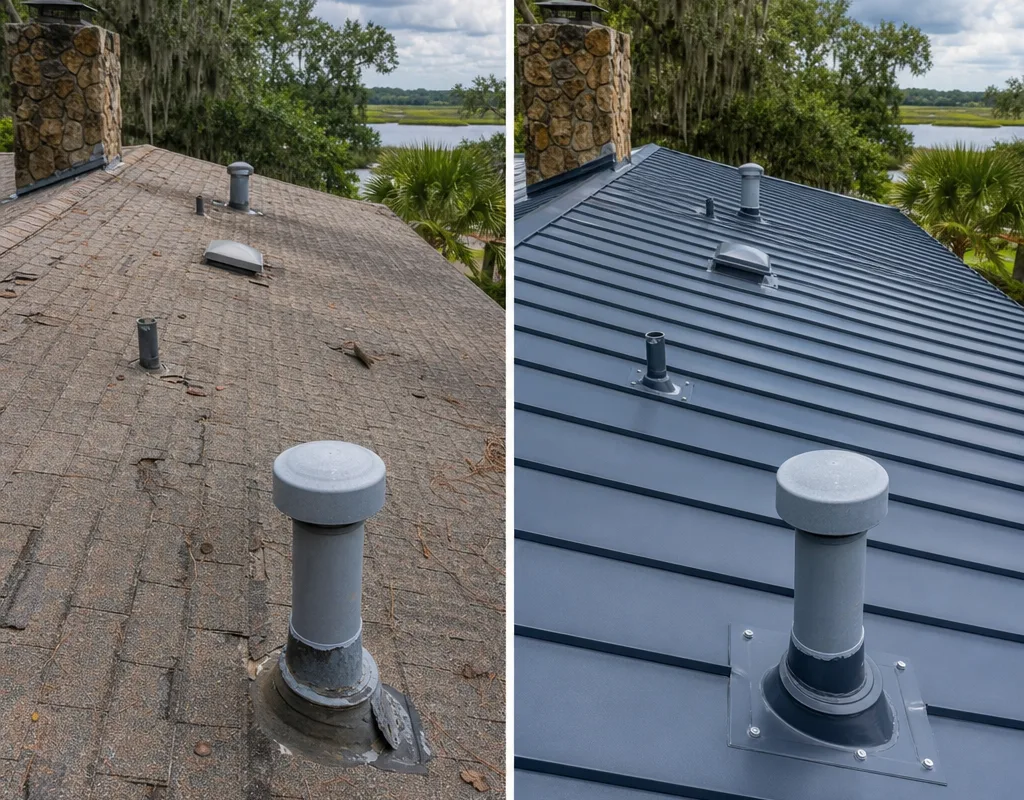
Before panels go down, we map every transition and penetration. Correct step flashing, counterflashing, and boot selection prevents the common leak points that show up years later.
Serving Jacksonville, Florida & surrounding areas
Metal Roof Installation · Jacksonville, FL
Install a roof built for Florida heat, wind, and salt air. Get a clear scope, the right system for your home, and clean workmanship from start to finish.
Jacksonville
Metal Roofs
Property Inspection
Built for Northeast Florida
If you are searching for metal roof installation jacksonville fl, you are probably looking for two things: long-term durability and an install that is done correctly the first time. In coastal Northeast Florida, metal roofing can be a smart choice, but only when the system is designed around real-world conditions like salt air, heavy rain, high humidity, and storm-driven wind.
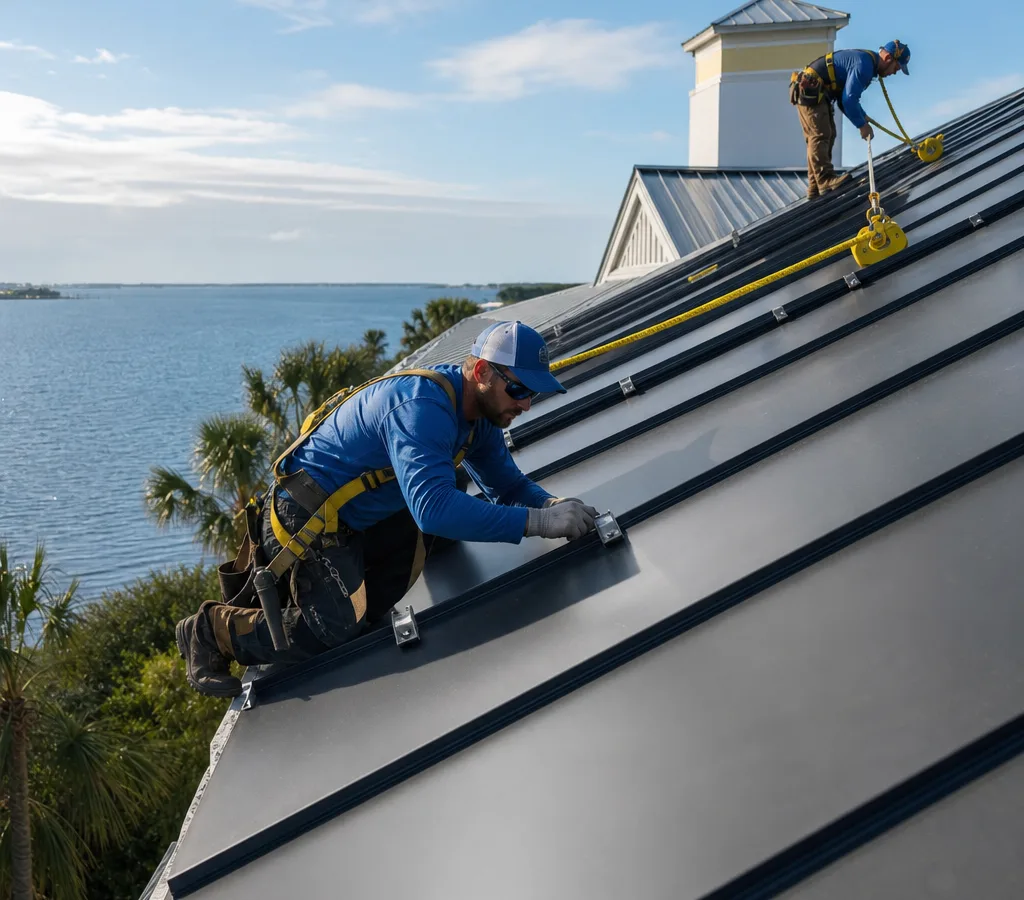
At Jacksonville Metal Roofing, our work focuses on the installation details that make or break a metal roof: correct underlayment, properly flashed penetrations, clean eave and ridge detailing, and fastener and clip layout that matches the panel type. The goal is straightforward. Your roof should shed water, resist corrosion, handle thermal movement, and stay quiet and tight through daily heat cycles.
Many homes around Downtown Jacksonville (ZIP 32202) and the surrounding areas include a mix of older rooflines, additions, and complex intersections. Those transitions are where leaks usually start, so we plan the install around valleys, walls, chimneys, skylights, and ventilation before the first panel goes on.
Complete Roof Assembly
A metal roof is a system, not just panels. When we quote and install, we look at the full assembly so you know what is being built onto your home.
Typical scope items include:
Choosing the right metal roof profile matters. Standing seam systems reduce exposed fasteners on the field of the roof and can be a great fit for many Jacksonville homes. Exposed-fastener panels can also be appropriate in some applications, but they need correct fastener placement and washer compression, plus a plan for long-term maintenance. We will explain what we recommend and why, in plain language.
Workmanship Standards
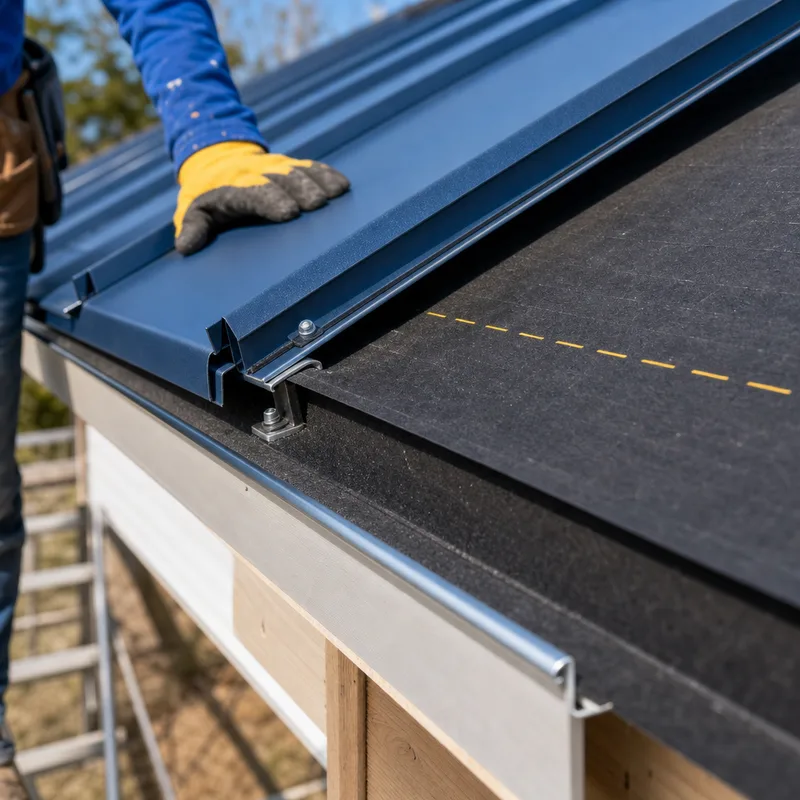
Before panels go down, we map every transition and penetration. Correct step flashing, counterflashing, and boot selection prevents the common leak points that show up years later.
In a coastal region, finish quality and compatible metals matter. We pay attention to coating type, cut-edge exposure, and avoiding dissimilar-metal contact where it can cause galvanic corrosion.
Eaves, rakes, and ridges take the brunt of storm conditions. We build these areas to stay tight and shed water, instead of relying on sealant as the primary defense.
Metal expands and contracts with temperature swings. Clip spacing, fastener patterns, and panel layout should allow movement without oil-canning, fastener stress, or premature wear.
We protect landscaping and access paths, manage debris, and use magnetic sweep cleanup for fasteners. The finish should look good, and the property should be left orderly.
Inspection to Completion
We review roof geometry, penetrations, drainage paths, attic ventilation, and access. If there are multiple roof levels or tight setbacks, we plan staging and material handling up front.
You get a clear description of the panel type, underlayment, flashing approach, and the edge and ridge details. We also confirm color and finish so expectations are locked in before ordering.
We remove existing roofing when required and check the roof deck condition. Any problem areas get addressed so the new system has a sound substrate.
We install underlayment and build the critical transitions first: eaves, valleys, walls, and penetrations. This is where water control is won or lost.
Panels, clips or fasteners, and trim are installed to manufacturer specifications and matched to the roof layout. We pay close attention to straight lines and consistent reveal for a clean final look.
We do a full perimeter check, confirm flashing and trim integrity, and clean the property thoroughly. You also get guidance on what to look for over time, like keeping gutters clear and watching for storm debris.
Planning Your Investment
Metal roof installation in Jacksonville typically ranges from $12 to $22 per square foot installed for many residential projects, with complex rooflines and premium standing seam systems sometimes landing higher. A smaller, straightforward roof with exposed-fastener panels often sits at the lower end, while multi-level roofs with lots of valleys, wall flashing, and custom trim push pricing up.
Your final cost depends on roof size and pitch, tear-off needs, deck repairs, panel profile (standing seam vs exposed fastener), underlayment choice, flashing complexity, and access for staging and material handling. Exact pricing is confirmed after an on-site inspection and a written scope.
Jacksonville
Roof Details
Coastal Roof Systems
Finished Work and Field Practice
Jacksonville Property Fit
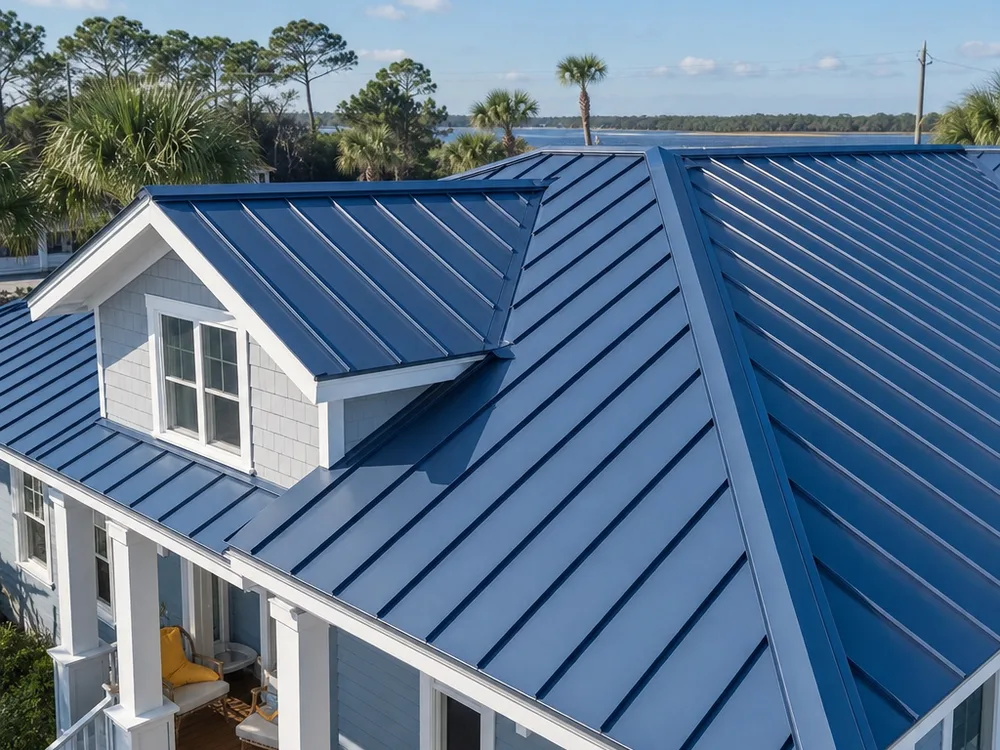
Jacksonville has a wide mix of roof shapes and home ages, and the install approach needs to match what is actually on the house.
In Riverside and Avondale, many homes have older rooflines, intersecting gables, and multiple penetrations. That usually means extra attention to wall flashing, chimneys, and valleys, plus trim work that looks right on a historic-style exterior.
Out at the Beaches, salt air can be harder on exposed edges and cut ends. Material compatibility and finish quality matter, and it is worth planning details like fastener type and how edges are protected.
In Southside and the Arlington area, you often see larger footprints and long roof runs. Panel layout, thermal movement planning, and straight-line installation make a big difference in how the roof looks from the street.
If you are comparing options across Jacksonville, our team can walk you through panel profiles, colors, and realistic maintenance expectations. For a broader look at materials and roof types we work with, you can also review our work with metal roofing in Jacksonville FL.
Answers Before You Decide
Most residential metal roof installations take about 2 to 5 days once work begins, depending on roof size, complexity, weather, and whether tear-off and deck repairs are needed. In Jacksonville, afternoon storms and high humidity can affect scheduling, especially when prep work needs dry conditions. After an on-site inspection, we can give a realistic timeline based on your roof's pitch, number of penetrations, and material lead time.
Standing seam is often chosen for long-term performance because the field of the roof has fewer exposed fasteners, and the system is designed to manage thermal movement. Exposed-fastener panels can be a good fit for certain budgets and simpler roof shapes, but they rely on correctly installed fasteners and washers and may need more periodic attention over the years. The right choice depends on roof geometry, aesthetics, and what level of maintenance you are comfortable with.
Sometimes, but it depends on the condition of the existing roof, local requirements, and whether the deck needs inspection or repair. Installing over an existing shingle roof can save tear-off time, but it can also hide deck issues and complicate edge and flashing details if not planned carefully. We evaluate the roof in person and recommend the approach that gives you a sound substrate and proper flashing.
On most homes with an attic space and proper underlayment, a metal roof is not dramatically louder than other roofing materials. Noise concerns usually come up when metal is installed over open framing or on structures without insulation and a ceiling cavity. During your inspection, we look at the assembly below the roof and specify underlayment and ventilation details that support both performance and comfort.
Look for clear language on what is covered (leaks at flashing, trim, and penetrations), what maintenance is expected, and how warranty service is handled. Manufacturer warranties typically cover the metal panel finish or material defects, while workmanship coverage addresses installation quality. We provide a written scope so you can see exactly what details are included in your installation.
Start With an On-Site Look
Tell us about your home and what you want from the new roof. We will schedule an on-site inspection, explain the best system for your roofline, and provide a written scope you can trust.