A written scope you can verify
The estimate should list panel profile, finish, underlayment, flashing scope, ventilation plan, and how old materials will be removed and disposed of. Vague allowances make it hard to compare companies.
Serving Jacksonville, Florida & surrounding areas
Metal Roofing Companies · Jacksonville, FL
Get a clear scope, material options that fit coastal weather, and an install plan that keeps your property clean and on schedule for residential or commercial metal roofing.
Jacksonville
Metal Roofs
Property Inspection
Built for Northeast Florida
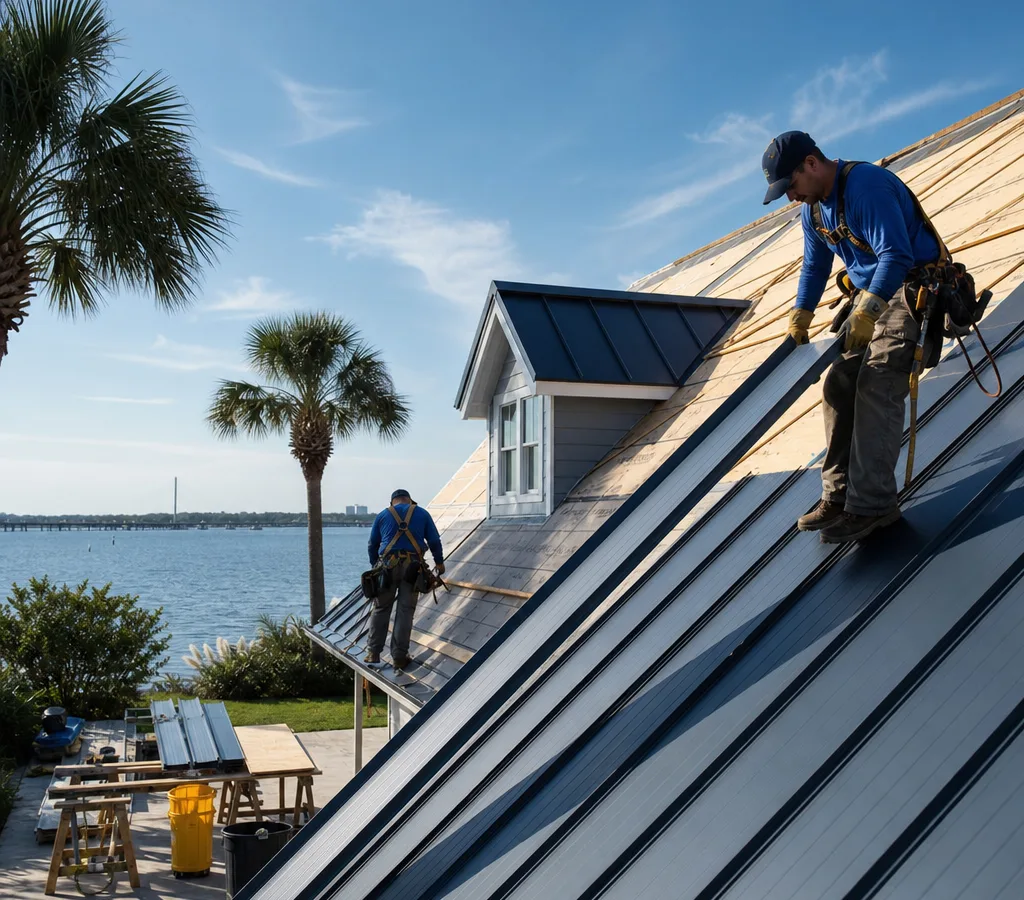
If you are comparing metal roofing companies in Jacksonville FL, the difference is rarely the sales pitch. It is the scope clarity, the metal system specified, and whether the crew installs the roof as a tested assembly: deck prep, underlayment, flashing, panel fastening method, and ventilation.
Jacksonville sits in a high-wind, heavy-rain region, and corrosion resistance matters too. That means the details on your estimate should be specific: panel type (standing seam vs exposed-fastener), gauge and finish, underlayment type, flashing metals at valleys and penetrations, and how transitions are handled at walls and chimneys.
Jacksonville Metal Roofing helps property owners sort through those details, compare bids apples-to-apples, and move from inspection to installation with a written plan. If you want to see what we handle across the area, start with metal roofing in Jacksonville FL.
Contractor Checklist
The estimate should list panel profile, finish, underlayment, flashing scope, ventilation plan, and how old materials will be removed and disposed of. Vague allowances make it hard to compare companies.
Simple gable roofs can fit several metal systems. Complex hips, dormers, low-slope transitions, and lots of penetrations usually benefit from standing seam details and careful flashing sequencing.
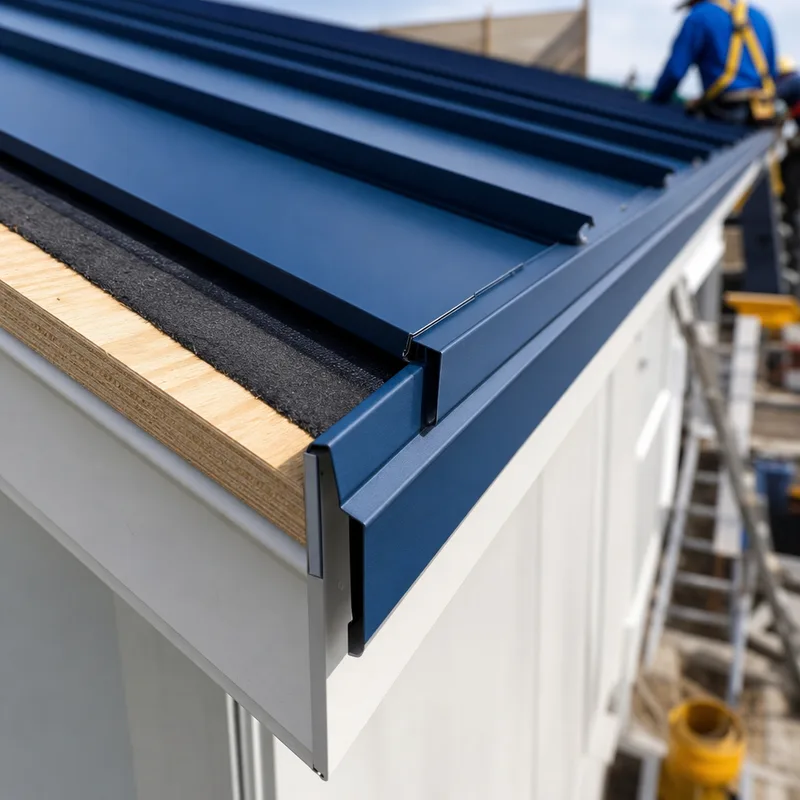
Ask how valleys, pipe boots, skylights, and wall transitions are flashed, and what gets replaced versus re-used. The weak points are almost always details, not the field panels.
Good crews stage materials safely, protect landscaping and driveways, and run magnetic sweeps for fasteners. Cleanup and protection should be part of the plan, not an afterthought.
For many replacements, permits and inspections can apply. A qualified contractor will tell you what is required for your address and include it in the schedule.
You should receive manufacturer documentation for the metal finish and a workmanship warranty from the installer. Get the exclusions and maintenance expectations upfront.
Systems and Service Details
Most quotes you receive will center on two main systems:
In coastal Florida conditions, the finish and the compatibility of metals at flashings and trim can affect long-term corrosion resistance. We will walk you through practical choices like panel profile, gauge, color/finish, underlayment, and ventilation so you can choose what fits your building instead of guessing.
If your property is near the riverfront or closer to the coast, salt-laden air can be a factor. That is one reason we spend time on trim metals, fasteners, and the full assembly, not just the panels you see from the street.
Inspection to Completion
We look at roof geometry, penetrations, drainage points, decking condition (as visible), and access for staging and tear-off. Measurements and photos document what the quote includes.
You get a written scope that spells out panel type, underlayment, flashing work, ventilation approach, and disposal. If there are options, we price them as clear alternates.
We coordinate material delivery, staging locations, and protection for landscaping and driveways. For occupied commercial buildings, we plan noise and access to reduce disruption.
Tear-off (if required), deck prep, underlayment, metal install, flashings, and trim. We keep the site organized and do regular magnet sweeps for fasteners.
We review the finished work, confirm trim and flashing details, and provide warranty information and basic maintenance guidance for your metal roof system.
Planning Your Investment
Metal roof installation in Jacksonville typically ranges from about $10,000 to $35,000+ for many homes, depending on roof size, pitch, and the metal system selected. Exposed-fastener panels often price lower, while standing seam systems with more trim and flashing work generally run higher.
Your final price changes with tear-off layers, decking repairs, number of penetrations and valleys, access and staging constraints, and the underlayment and flashing package specified. The exact cost is confirmed after an on-site roof inspection and a written scope.
Jacksonville
Roof Details
Coastal Roof Systems
Finished Work and Field Practice
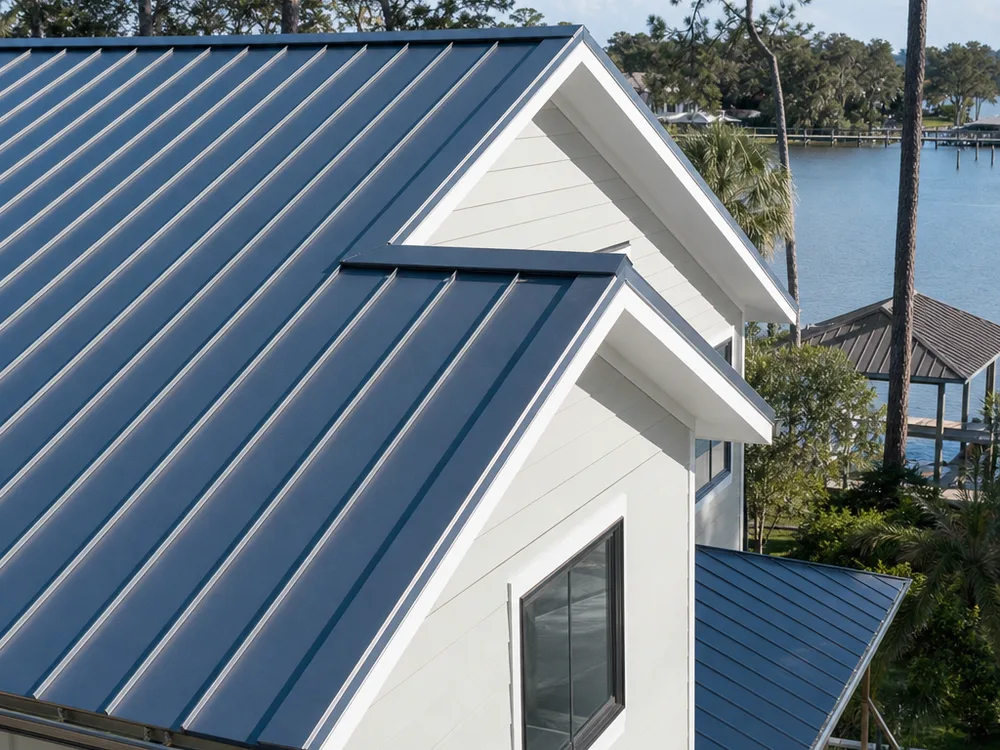
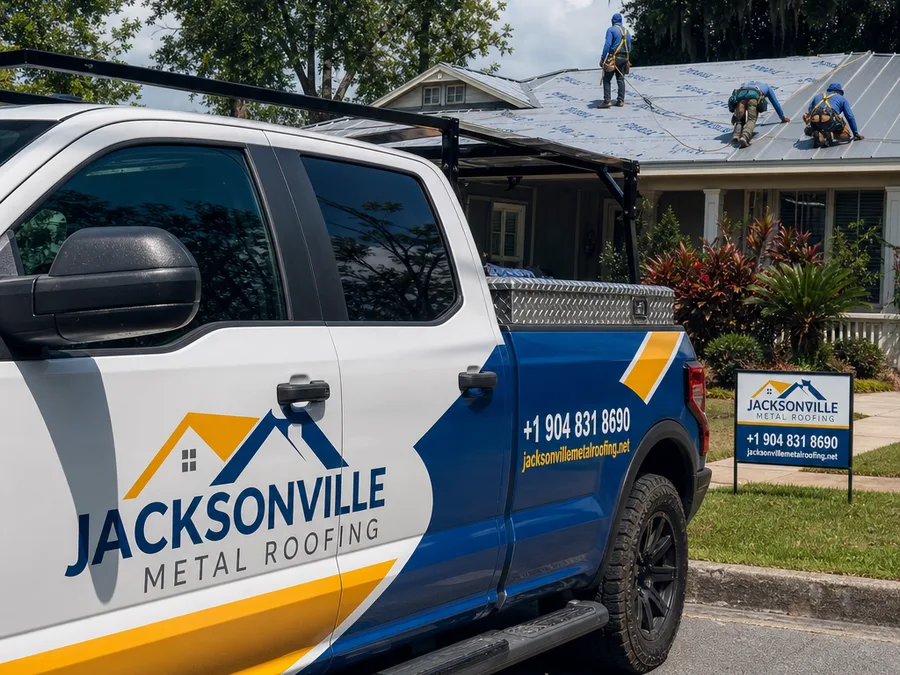
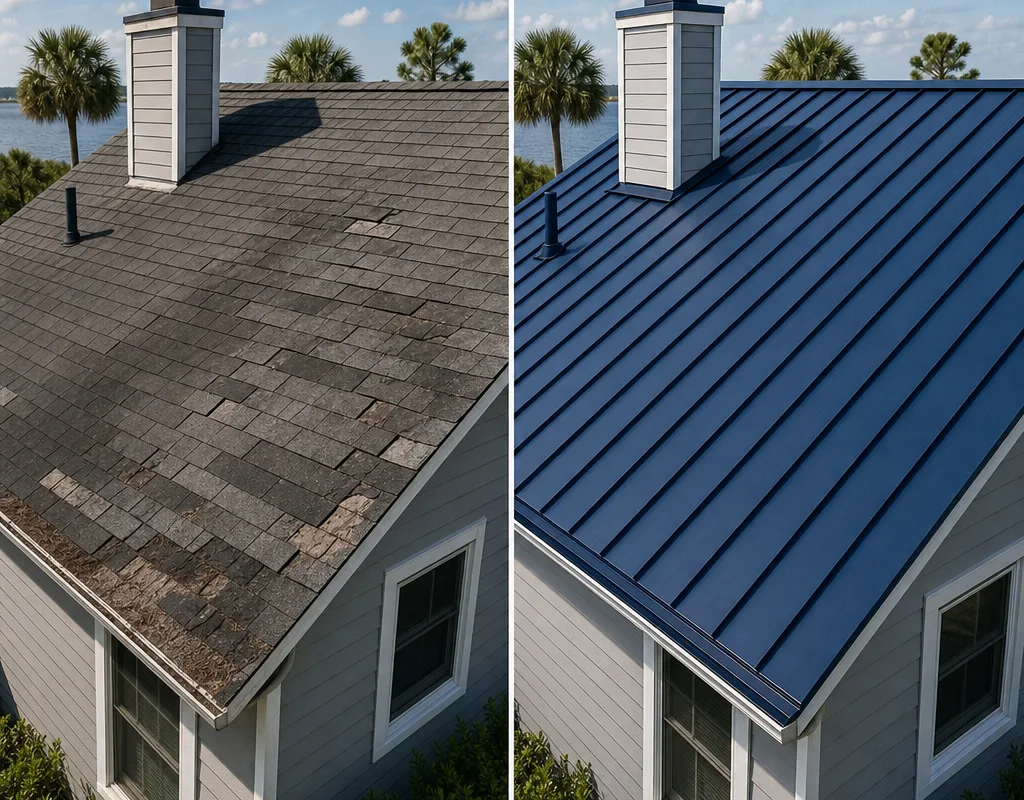
If you are comparing bids, ask for a written scope that lists the panel system, underlayment, flashing plan, and cleanup approach. We can provide a quote you can actually compare.
Get Instant QuoteAnswers Before You Decide
Compare written scopes line-by-line, not totals. Make sure each quote specifies the metal system (standing seam or exposed-fastener), underlayment type, flashing replacement at valleys and penetrations, venting approach, tear-off and disposal, and what happens if deck repairs are needed.
Standing seam is often chosen for its concealed fasteners and strong water-shedding details when properly installed. In a high-rain, high-wind region like Northeast Florida, many owners value the reduced reliance on exposed fasteners and the clean detailing around penetrations and transitions.
Many residential installs take several days once materials are on site, but the timeline depends on roof size, geometry, tear-off requirements, and weather. Homes with multiple penetrations, hips and valleys, or decking repairs typically take longer than simple gable roofs.
Permits are commonly required for roof replacement work, and inspections may apply. The best approach is to have your contractor confirm requirements for your specific address and include permitting and inspection steps in the schedule and scope.
Sometimes it can, but it depends on the existing roof condition, local requirements, the metal system chosen, and whether the substrate can be made flat and secure. A proper inspection should confirm whether tear-off is the safer option, especially if there is any sign of trapped moisture, soft decking, or multiple layers.
Leaks usually trace back to details: pipe boots, skylights, wall transitions, valleys, ridge and hip caps, and fastener issues on exposed-fastener systems. That is why a good scope spells out flashing materials and replacement methods, not just the panel type.
With proper decking and underlayment, many homeowners find interior noise is similar to other roofing materials. Noise depends on the roof assembly beneath the panels, attic insulation, and whether the system is installed over a solid deck versus open framing.
Ask what finish system is specified, what metals are used for trim and flashings, and whether fasteners are rated for coastal exposure. In salt-air conditions, material compatibility and quality fasteners matter as much as the panel itself.
Start With an On-Site Look
Tell us about your property and what you are trying to solve. Jacksonville Metal Roofing will review options, inspect the roof, and provide a written scope with a realistic schedule.