One call instead of ten • No web forms, no callback spam • Booking Fall & Winter 2026

Roof Insurance Guidance · Jacksonville, FL

Roof Age Homeowners Insurance Florida

If your carrier is asking for proof of roof condition or age, you have options. Get a clear plan for documentation, repairs, or replacement with metal roofing that fits Florida wind and rain exposure.

✓Roof condition assessment ✓Photo documentation ✓Repair or replacement scope
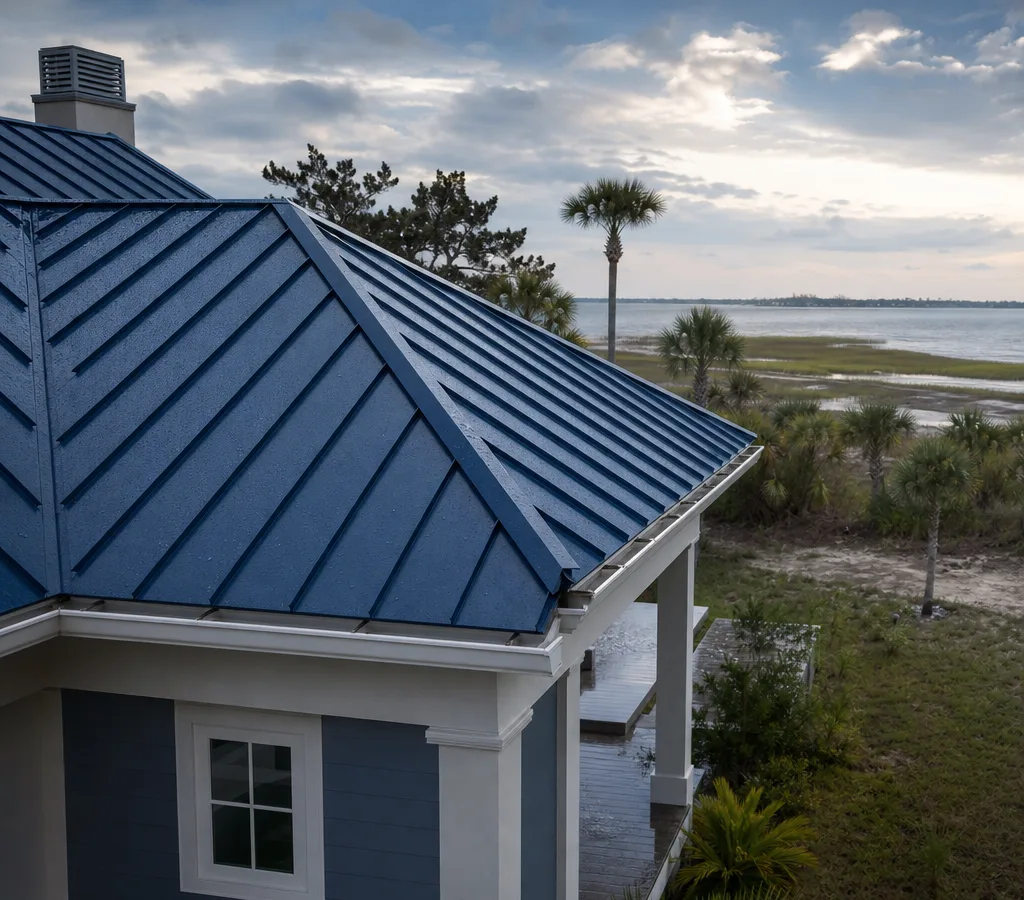
Jacksonville home with a clean standing seam metal roof after a rain shower

Jacksonville

Roof Review

Property Inspection

Florida Insurance Considerations

Why roof age matters to homeowners insurance in Florida

Roof age homeowners insurance Florida rules often show up when you renew, shop for a new policy, or after an inspection report flags the roof as older or worn. Insurers care about two things: the roof's expected remaining service life and its current condition—fasteners, flashing, underlayment performance, and signs of active leaks.

In Jacksonville, that scrutiny is common because roofs take real punishment from wind-driven rain, hurricane-season gusts, and intense sun. Even if a roof is not leaking today, curling, granule loss on shingles, rusting components, soft decking, or compromised flashing can lead to underwriting questions.

The practical takeaway: insurance decisions are rarely based on age alone. Age triggers the question, but your documentation and the roof's condition usually determine whether you are offered standard coverage, asked to repair or replace, or pushed into a different policy tier. Jacksonville Metal Roofing helps homeowners evaluate what a carrier is likely to ask for and what a metal roofing upgrade can do to reduce future roof-related underwriting friction.

Get Your Instant Quote

Build a Clear Roof Record

Roof inspections, documentation, and what carriers typically ask for

When roof age becomes a problem, most homeowners run into the same requests: proof of installation date, photos of roof planes and penetrations, and a statement about condition from a licensed contractor or inspector.

What helps most in real underwriting conversations:

  • A written roof assessment that notes material type, approximate age, visible wear, and any active deficiencies.
  • Clear photos of valleys, eaves, ridges, pipe boots, vents, skylight flashing, and low-slope transitions.
  • Documentation of repairs—including invoices and scope notes—and, if applicable, a permit record.

In Florida, permitting is often part of the paper trail. In Jacksonville, roof replacements and many roof-related structural changes generally run through the City of Jacksonville Building Inspection Division. If you are missing records, you can still build a usable file with a current condition report and a scope that ties repairs or replacement to specific observed issues.

If you are weighing metal as the next roof, start by reviewing the roof-to-wall transitions and edge details. Underwriters notice the weak points first, and those are the same areas that decide whether a roof performs well in wind and heavy rain.

Get Your Instant Quote
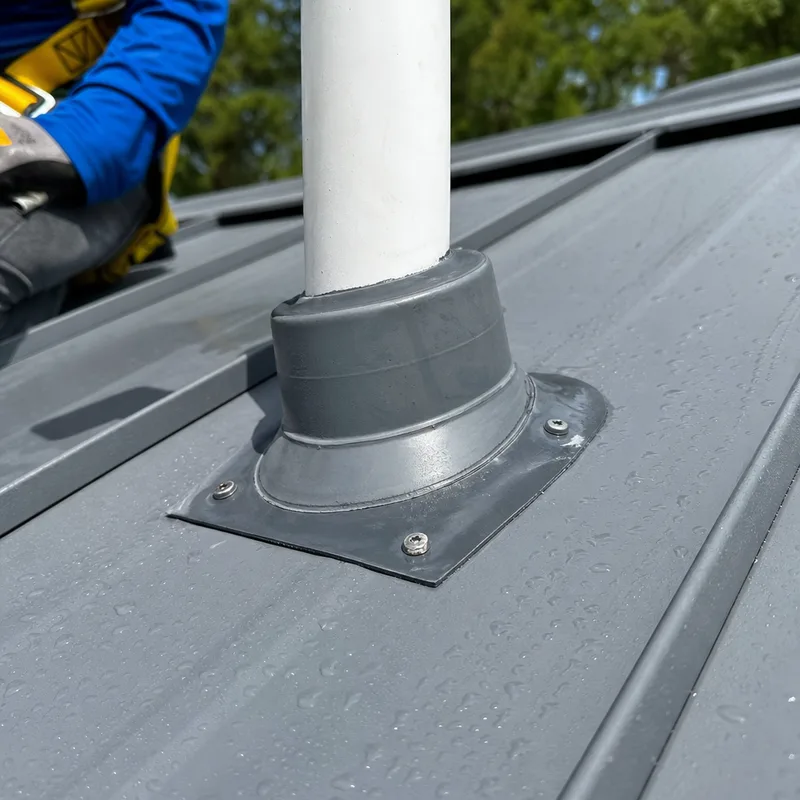
Metal roof flashing at a plumbing vent beside standing seam panels

A More Documentable Roof

How metal roofing can help with roof age and insurability

Long service life with consistent condition

A key advantage of metal is that it can stay in stable, inspectable condition for a long time when it is installed with the right underlayment, fasteners, and flashing. That makes future inspections easier to support with photos and a simple condition report.

Better performance in wind-driven rain

Jacksonville storms rarely fail a roof in the middle of a field; they fail it at edges, penetrations, and transitions. Metal roof systems focus on locked seams, edge metal, and flashing packages designed to shed water even when wind pushes rain uphill.

Cleaner evidence for underwriting

Metal roofs are easier to document. Panel condition, seam integrity, and flashing details are straightforward to photograph, and repairs are usually specific and visible instead of hidden under layers.

Fire and debris resistance benefits

Florida carriers look at multiple hazards. Metal roofing can reduce vulnerability to flying debris damage compared with more brittle materials, depending on profile and attachment, and it is noncombustible.

Repairability without full tear-off in some cases

If the structure and system allow it, targeted repairs—flashing replacement, fastener corrections, or isolated panel work—can sometimes extend service life and satisfy inspection findings. A site evaluation determines what is appropriate.

Get Your Instant Quote

Jacksonville Homeowner Scenarios

Roof age homeowners insurance Florida: common scenarios we see in Jacksonville

Every insurer has its own underwriting guidelines, but homeowners in Jacksonville tend to run into a few repeating situations:

Renewal notice asks for a roof update. You may be told the roof is “too old” or that coverage will change unless you provide proof of replacement or a favorable inspection. The fastest path is usually a contractor assessment with photos plus a plan that addresses visible deficiencies.

You are shopping for a policy after buying a home. Older neighborhoods with mature trees and mixed roof histories can trigger more detailed questions. If the roof age is unknown, a condition report and any permit or invoice records help reduce back-and-forth.

An inspection flags granular loss, soft spots, or compromised flashing. Even if you are not seeing leaks inside, carriers can treat these as elevated risk. In Florida's climate, small flashing failures can become interior damage quickly.

You have a prior repair history. Patchwork repairs are not automatically a problem, but insurers often want to see that repairs were done correctly and that the underlying roof system is still sound.

If your home is closer to the Intracoastal influence and open wind exposure, including parts of the Beaches area, carriers can be especially focused on wind performance and roof attachment details. In more sheltered neighborhoods with heavy tree canopy, documentation may also need to address debris damage patterns, clogged valleys, and punctures around limbs and overhanging branches.

Get Your Instant Quote

Assessment to Documentation

A practical plan if your insurer is questioning roof age

  1. 01

    Collect what you already have

    Pull together prior invoices, permits, seller disclosures, and photos. If you do not have an install date, do not guess. Focus on current condition and verifiable paperwork.

  2. 02

    Get a roof condition assessment

    The evaluation should document material type, visible wear, flashing condition, penetrations, and signs of moisture entry. Photos should include wide shots and details taken in good light.

  3. 03

    Decide between repair, restoration, or replacement

    If issues are limited to flashing, fasteners, or a small area of damage, repairs may be enough to satisfy an insurer. If the system is near end-of-life or has widespread deterioration, replacement is usually the cleanest underwriting answer.

  4. 04

    Pick a system that documents well

    For metal, that means selecting an appropriate profile, high-quality underlayment, and correct edge and valley details. The goal is a roof that performs well and is easy to prove on future inspections.

  5. 05

    Build an underwriting-ready file

    Keep the contract scope, permit sign-offs when applicable, and completion photos showing edges, seams, valleys, and penetrations. This packet helps at renewal, while shopping policies, and after storms.

Get Your Instant Quote
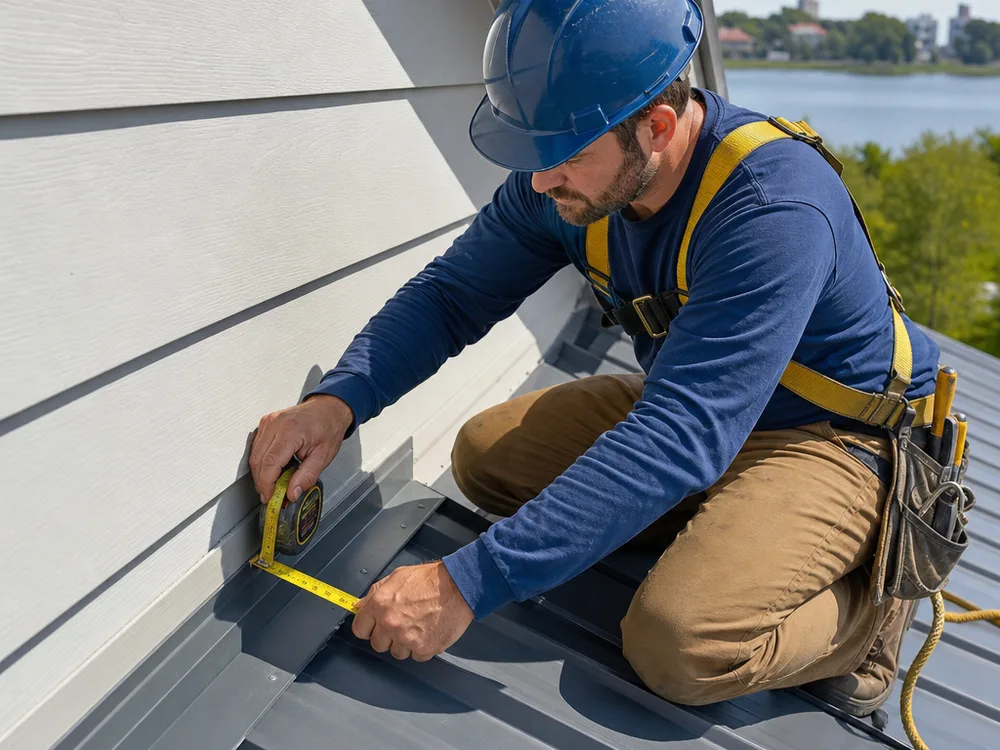
Technician inspecting metal roof edge details and sidewall flashing in Jacksonville

Installation Details Matter

Metal roof system details that matter for insurance conversations

If you are considering metal to get ahead of roof age questions, focus on details that carriers and inspectors can clearly evaluate.

Look closely at:

  • Underlayment selection and transitions at valleys, sidewalls, and chimneys.
  • Edge metal and drip edge integration with the roof covering.
  • Attachment method and fastening schedule appropriate to the roof type and exposure.
  • Flashing at pipe boots, vents, stucco, siding, and masonry transitions.
  • Ventilation and moisture management, especially where attic heat load is high in Northeast Florida.

The best way to avoid future underwriting problems is to install a system that stays watertight at the details. A clean field of panels means little if a single wall transition or valley is not built correctly.

Jacksonville Metal Roofing is the team residents reach out to for metal roofing in Jacksonville, FL.

Get Your Instant Quote

Jacksonville

Clear Scope

Coastal Roof Systems

Do Not Let a Deadline Drift

If you have a renewal deadline, move quickly

A documented condition assessment and a clear scope for repair or replacement usually matters more than arguing about roof age.

Call for a Free Estimate

Answers Before You Decide

FAQ: roof age and homeowners insurance in Florida

Will homeowners insurance in Florida deny coverage just because my roof is old?+

It can, but most insurers look at roof age plus condition, not age alone. An older roof that shows sound flashing, no active leaks, and no widespread wear can be treated differently than a newer roof with visible defects. If your carrier is pushing back, a written condition report with clear photos is often the fastest way to clarify what they will accept.

What documents should I provide when an insurer questions roof age?+

Provide anything that proves install date and current condition: paid invoices, permit records when applicable, and labeled photos of roof planes, edges, valleys, and penetrations. In Jacksonville, permit history may run through the City of Jacksonville building inspection process, but even without older paperwork, a current contractor assessment with photos can create a usable baseline for underwriting.

Does a metal roof help with roof age homeowners insurance Florida issues?+

A metal roof can help because it typically maintains visible, documentable condition over time and performs well in Florida wind and rain when properly installed. Insurers still underwrite based on the specific roof system and its condition, so the flashing package, underlayment, and edge details matter as much as the panel type.

If I replace my roof with metal, what should I keep for future renewals?+

Keep the signed scope of work, any permit sign-off you receive, and completion photos that clearly show seams, edges, valleys, and all penetrations. Also keep any manufacturer information you were provided. This makes it easier to respond when an insurer asks for proof of roof age or condition years later.

How fast can roof work be done if I have an insurance deadline?+

Scheduling depends on weather, material availability, and the scope—repairs versus full replacement. If you have a nonrenewal or conditional renewal date, share that upfront so the assessment and documentation can be prioritized and you can decide quickly whether repairs are realistic or replacement is the better path.

Can you inspect my current roof and tell me whether repairs might satisfy my insurer?+

Yes. A roof assessment can identify whether the issues are localized—often flashing, penetrations, or edge details—or system-wide wear that points toward replacement. The outcome should be a written summary and photos you can share with your agent or carrier.

Start With an On-Site Look

Need clarity on roof age questions before your next renewal?

Tell us what your insurer requested and your timeline. We will look at the roof's condition, explain realistic options, and help you document repairs or a metal roof replacement the right way.