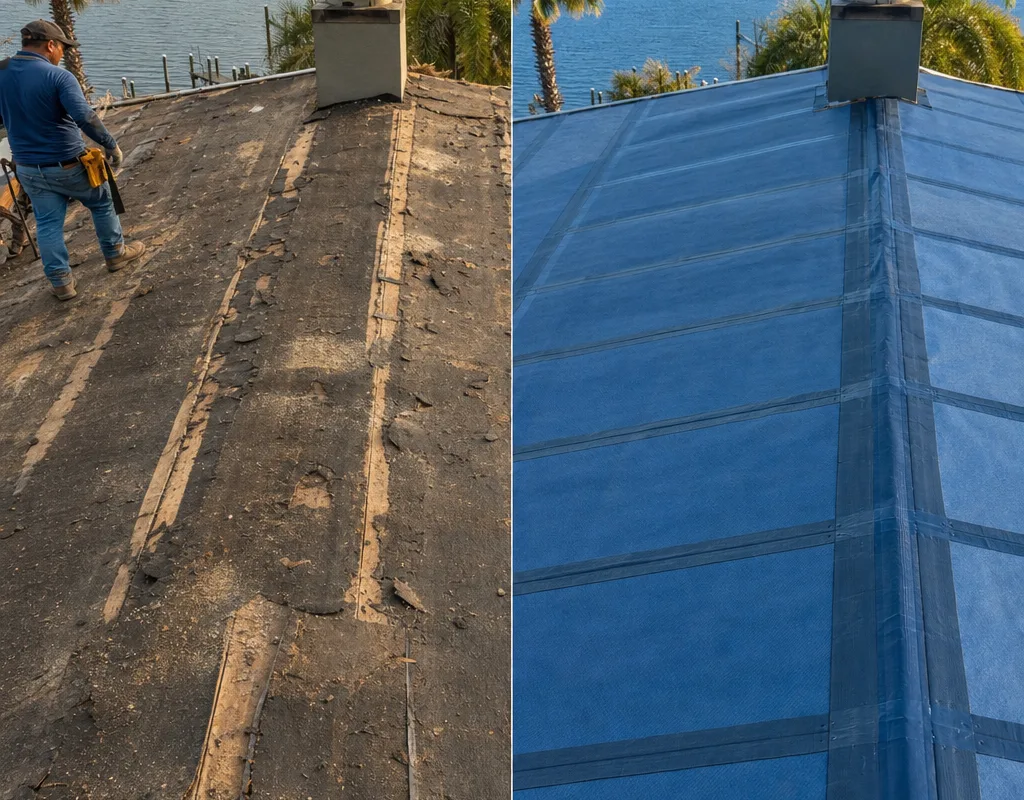
Deck prep before anything is covered
Secondary protection is only as good as the surface under it. We look for damaged sheathing, raised fasteners, rot, and debris that can telegraph through underlayment or prevent proper adhesion.
Serving Jacksonville, Florida & surrounding areas
Secondary Water Resistance · Jacksonville, FL
Add a dedicated water-shedding layer under your metal roof to help protect the roof deck during wind-driven rain, tropical storms, and everyday Jacksonville downpours.
Jacksonville
Water Barrier
Property Inspection
Built for Northeast Florida Rain
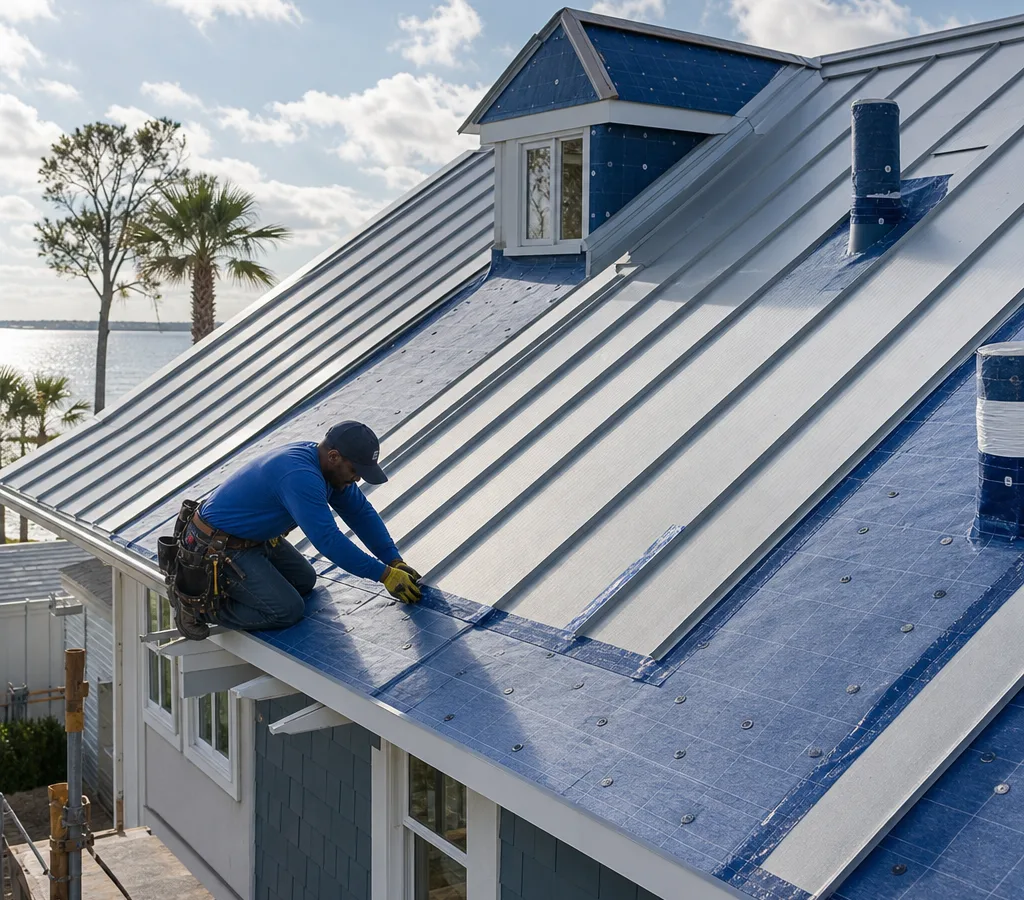
A secondary water resistance Florida roof system is an additional water-shedding layer installed over the roof deck and under the primary roofing. With metal roofing, the panels and flashings do most of the work, but heavy rain pushed by wind can still find its way into vulnerable points like eaves, valleys, hips, fastener lines, and around penetrations.
Secondary water resistance focuses on the layer you do not see once the roof is finished: the underlayment and the way it is sealed, lapped, and tied into flashings. Done right, it helps keep bulk water off the decking and moving toward the gutter system, even if water gets past the outer surface during severe weather.
In Jacksonville, this layer matters because storms often deliver wind-driven rain and quick spikes of water flow. The practical goal is to reduce the chance that the roof deck gets wet when conditions are at their worst.
Common Water Entry Paths
Most water problems under a metal roof start at details, not in the middle of an open field of panels. A reliable secondary water resistance plan targets the common entry paths:
When comparing options, ask specifically how the secondary layer is handled at the eaves, valleys, and penetrations. Those areas determine whether the system performs when Jacksonville gets sideways rain.
Scope Essentials
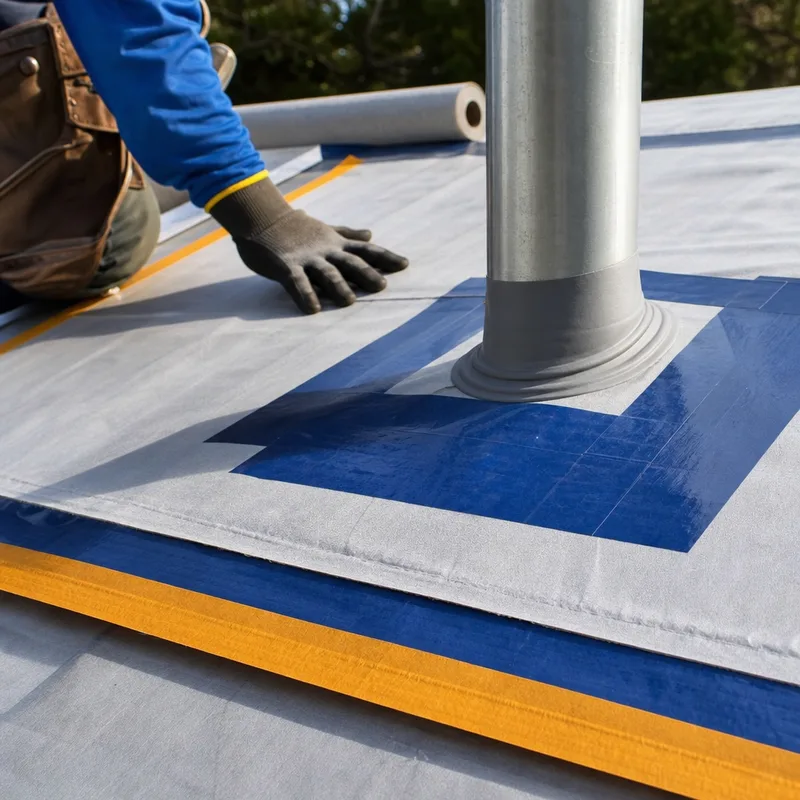
Secondary protection is only as good as the surface under it. We look for damaged sheathing, raised fasteners, rot, and debris that can telegraph through underlayment or prevent proper adhesion.
Metal roofs commonly use high-temperature-rated synthetic underlayments or self-adhered membranes in critical zones. The product has to match the roof design and the metal system above it.
Water management depends on lap direction, overlap lengths, and how edges terminate at eaves, rakes, and walls. The installation details matter as much as the material.
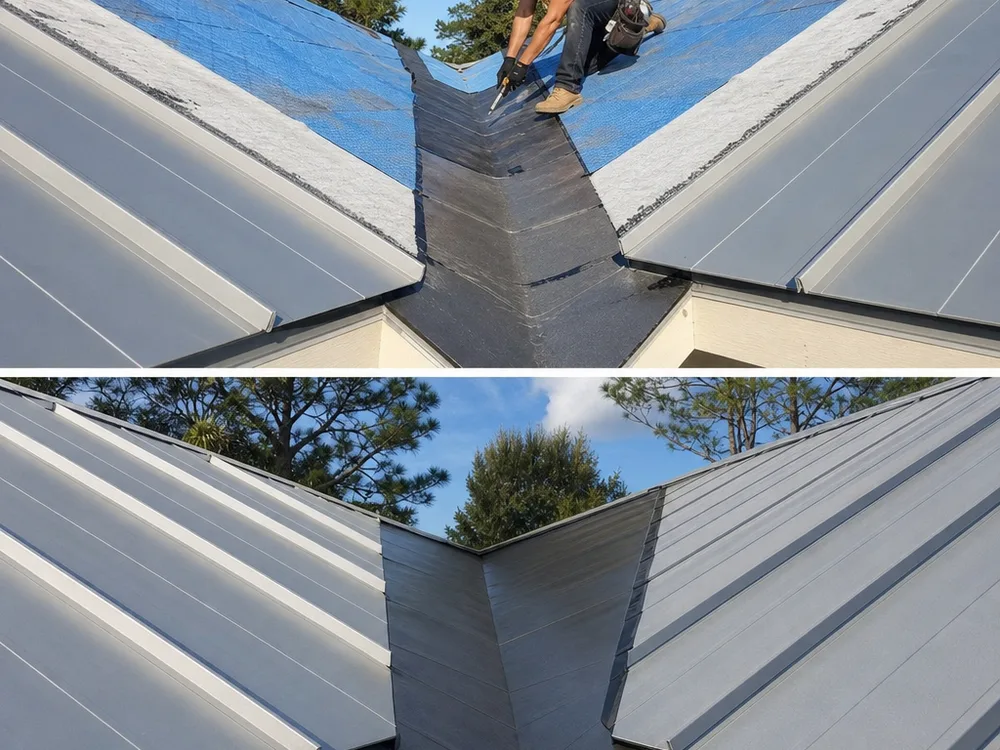
Drip edge, valley metal, sidewall and headwall flashings, and pipe boots should work with the secondary layer, not fight it. We detail the sequence so water always has a path out.
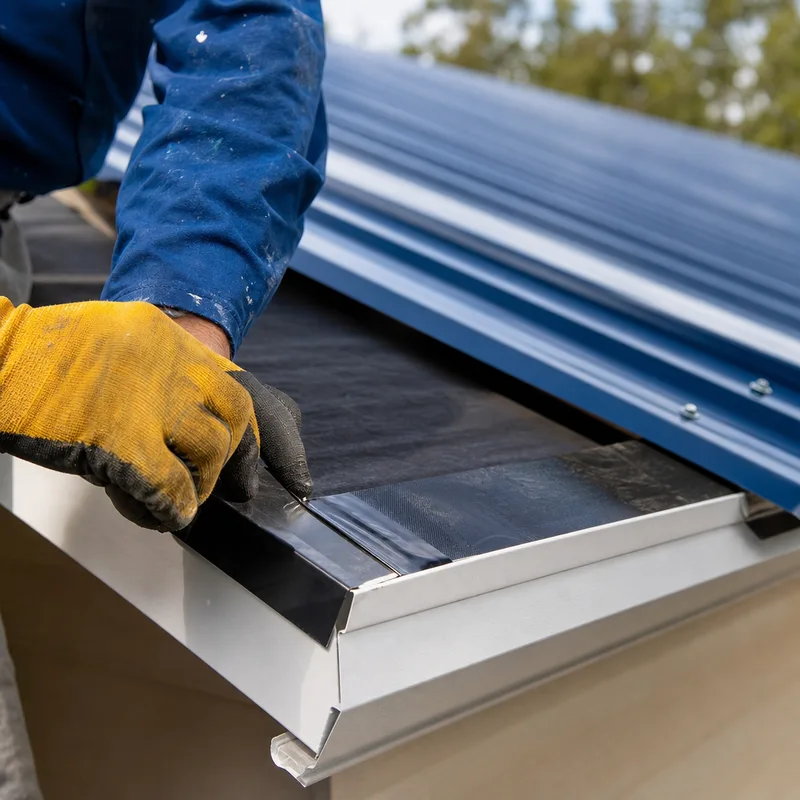
Edges see the highest wind effects. The secondary layer should be secure and sealed where specified so it does not lift, peel, or funnel water back onto the deck.
Jacksonville Roof Evaluation
Before recommending materials or a specific approach, Jacksonville Metal Roofing reviews the roof as a system. The right secondary water resistance details depend on what is already there and what you are installing over it.
Roof geometry and drainage paths. Valleys, dead valleys, low-slope tie-ins, dormers, and long runs change how water moves. Homes near the Intracoastal often see stronger gusts and salt air exposure, so edge detailing and corrosion-compatible components matter.
Deck condition and attachment. If decking is compromised, water protection alone will not solve the underlying issue. We look for soft spots, prior leak staining, and areas that need repair before underlayment goes down.
Penetration count and complexity. Every vent stack, skylight, and curb is a chance for water entry during a storm. The secondary layer must be detailed so it sheds water around penetrations, not toward them.
Neighborhood-specific realities. Older housing in Riverside and Avondale can include mixed roof planes and older decking repairs that need careful prep. Newer communities around Julington Creek often have multiple roof penetrations and long ridgelines where consistent detailing prevents small errors from repeating across the roof.
This service focuses specifically on the under-roof water-shedding layer and the details that make it dependable.
Inspection to Completion
We review the deck condition, edge details, valleys, penetrations, and any problem history. You get a clear scope that spells out where self-adhered membrane is used, how laps are handled, and what gets replaced or repaired.
We replace or re-secure damaged decking where needed and prep the surface so the underlayment lays flat and bonds properly where an adhesive membrane is specified.
Underlayment is installed in the correct sequence for water shedding: straight courses, proper overlaps, and sealed seams where the system calls for it. Critical areas like eaves, valleys, and penetrations receive extra attention.
We integrate the secondary layer with drip edge, valley metal, and wall flashings so transition points do not become funnels. This is where many leaks begin, so the sequencing matters.
Before the metal roof assembly is fully finished, we verify laps, terminations, and penetration details. It is easier to correct a small issue at this stage than after panels and trim are in place.
Planning Your Investment
Secondary water resistance in Jacksonville typically ranges from about $1,500 to $6,000+ depending on roof size, pitch, tear-off needs, and whether you use peel-and-stick membrane in critical zones or across the full deck. Smaller, straightforward projects often land on the lower end, while complex valleys, many penetrations, or full self-adhered coverage push costs higher.
Price changes most with deck repairs, access, the underlayment type—high-temperature synthetic or self-adhered—and how many transitions and wall tie-ins must be detailed. The exact cost is confirmed after an on-roof inspection and a written scope of work.
Jacksonville
Roof Details
Coastal Roof Systems
Answers Before You Decide
It is often required or strongly recommended depending on the roof assembly and local code requirements, and it is a smart upgrade for Jacksonville's wind-driven rain. Metal panels shed water well, but the underlayment and sealed details are what protect the deck when water gets pushed under edges, seams, or flashings during storms.
It depends on roof slope, geometry, and risk points, but many metal roofs use self-adhered membrane at eaves, valleys, and penetrations with a high-temperature synthetic underlayment on the remaining field. Full-deck peel-and-stick can make sense on complex roofs or where extra redundancy is desired, but it is not automatically the best fit for every project.
Usually not, because the secondary layer sits under the metal panels and key flashings. To install or correct it properly, the roof covering and trim typically need to be removed at least in the affected areas, then reinstalled with the correct sequence.
Most projects take 1 to 3 days for the secondary layer work, depending on roof size, weather windows, deck repairs, and detail complexity at valleys and penetrations. In Jacksonville, scheduling also has to account for afternoon thunderstorms in wetter months, so we plan tear-off and dry-in steps carefully.
The scope should name the underlayment type, where self-adhered membrane will be used, how seams and laps are sealed, and how eaves, valleys, and penetrations are detailed. It should also state whether decking repairs are included and how flashing transitions will be tied into the secondary layer before the metal roof is closed in.
Start With an On-Site Look
Describe your roof type and what you are seeing—or what you are planning to install—and Jacksonville Metal Roofing will recommend a secondary water resistance approach that fits the geometry, details, and weather realities in Jacksonville.